
“small batch fudge” explained
Get “small batch fudge” in united states, read on…
Here are a few options for making your fudge description more opinionated, playing with different tones and emphasis:
Option 1: Enthusiastic & Bold
The absolute, undeniable, most crucial element in crafting truly sensational fudge is achieving that perfectly cooked sugar, butter, and milk concoction. Forget everything else; this is where the magic truly happens.
The Glorious Rise of American Fudge: A Sweet Revelation
Don’t let its humble appearance fool you – fudge is a surprisingly modern marvel, a quintessentially American triumph! While it feels like it’s always been a staple, this divinely smooth, gloriously crunchy confection (hello, walnuts and pecans!) is a relatively recent invention, whispered to have been born from a deliciously happy accident in the hallowed halls of American women’s colleges around the late 1800s. The absolute secret to unlocking its creamy perfection? Hitting that precise “soft ball” stage with your sugar mixture and then mastering the art of the stir. From its potentially serendipitous origins as a kitchen mishap to its reign as a cherished American indulgence, enjoyed in delightful, nutty batches, fudge is a powerful, pure joy-inducing testament to the magic that can be conjured from the simplest ingredients.
Option 2: Slightly More Sarcastic & Humorous
Let’s be real: the single, solitary reason fudge goes from “meh” to “magnificent” is nailing that critical temperature for the sugar, butter, and milk. Everything else is just window dressing.
Fudge: America’s Unlikely, Gloriously Sugary Legacy
Think fudge has always been lurking in kitchens? Think again! This delightful, surprisingly recent invention is practically a patriotic dessert. Its smooth, toothsome texture, studded with the satisfying crunch of walnuts or pecans, owes its existence to the good ol’ U.S. of A. Legend has it, this treasure was accidentally discovered by some ingenious American college women back in the late 1800s. The true, non-negotiable key to transcending blandness? That exact “soft ball” temperature for the sugar mixture, followed by a properly executed stir. From its accidental birth into a beloved American staple, savored in small, nut-packed portions, fudge stands as a bold declaration that even a kitchen blunder can lead to unadulterated, sweet bliss.
Option 3: Emphasizing the Skill & Artistry
To elevate fudge from merely “made” to an absolute triumph of confectionery art, the paramount skill lies in precisely cooking the sugar, butter, and milk to its destined temperature. This is the foundation upon which all other success is built.
The American Ingenuity Behind Fudge: A Sweet Masterpiece
The perception of fudge as an ancient comfort is a charming misconception; its story is a vibrant testament to American innovation. This exquisite treat, celebrated for its velvety texture and the delightful textural counterpoint of nuts like walnuts and pecans, is inextricably linked to the United States. Tales abound of its serendipitous creation, a culinary spark ignited within American women’s colleges in the late 1800s. The linchpin of its sublime character? The masterful achievement of the “soft ball” stage and the delicate precision of the subsequent stirring. From its humble, possibly accidental beginnings to its esteemed status as a cherished American indulgence, best enjoyed in artfully crafted, nut-laden batches, fudge is a profoundly joyful expression of how simple elements can be transformed into pure, unadulterated delight.
Key Changes Made and Why:
- Stronger Verbs and Adjectives: Words like “crucial,” “absolute,” “undeniable,” “sensational,” “magnificent,” “triumph,” “exquisite,” “masterpiece,” “divinely,” “gloriously” inject strong opinions and elevate the language.
- More Definitive Statements: Instead of “The most important part,” consider “The absolute, undeniable, most crucial element” or “The single, solitary reason.” This leaves no room for debate in your opinion.
- Figurative Language and Metaphors: “Magic truly happens,” “patriotic dessert,” “culinary spark ignited,” “bold declaration” add personality and make the descriptions more engaging.
- Emphasis on “American”: Phrases like “quintessentially American triumph,” “practically a patriotic dessert,” and “American ingenuity” reinforce the connection and give it a distinct voice.
- Emotional Language: “Pure joy,” “unadulterated bliss,” “deliciously happy accident,” “profoundly joyful expression” convey your positive feelings about fudge.
- Slightly More Assertive Tone: The phrasing aims to sound more confident and less like a neutral observation.
- Adding a Touch of Narrative Flair: Phrases like “Don’t let its humble appearance fool you” or “Think fudge has always been lurking?” invite the reader into a more personal take.
Choose the option that best fits the voice and personality you want to convey for your fudge writing!
Sure, here is a blog article about small-batch fudge and the United States.
Unleash Your Inner Candy Maker: Let’s Make Fudge!
Ever dream of creating sweet, gooey, melt-in-your-mouth fudge right in your own kitchen? It might sound fancy, but making delicious fudge, especially the kind called “small-batch” or “Nutty Fudge,” is totally doable! This isn’t the super hard candy you might imagine; it’s more like a warm hug in dessert form. And guess what? This yummy treat has a special connection to the United States!

The Sweet History of Fudge in America
Fudge might seem like it’s been around forever, but it’s actually a relatively new invention, and its story is tied to the United States!
A Happy Accident?
Nobody is totally sure exactly where fudge was invented, but most food historians believe it popped up in the United States sometime in the late 1800s. Think of a time with horse-drawn carriages and even fancier hats!
- The College Connection: Many stories point to a mistake made by candy makers at women’s colleges. They were trying to make something else, maybe a fancy caramel, but it didn’t turn out quite right. Instead of throwing it away, they tasted it, and “oops!” – delicious fudge was born! This happened around the same time that many of these colleges were becoming popular places for young women to learn.
From Fancy Treats to Home Kitchens
At first, fudge was a bit of a special, sometimes expensive, treat. But as recipes became more common and ingredients like sugar became more affordable, everyone could enjoy it.
What Makes Fudge “Small-Batch” and “Nutty”?
When you hear “small-batch fudge,” it means it’s made in smaller, more manageable amounts. This is great for home cooks because it’s easier to control and often results in a fresher, tastier product.
The Magic of “Small Batch”
- More Control: Making fudge in a smaller pot means the heat is more even. This helps prevent it from burning or getting too hard.
- Fresher Flavors: When you make a little bit at a time, you can enjoy your fudge while it’s at its peak deliciousness.
Why “Nutty Fudge” is So Popular
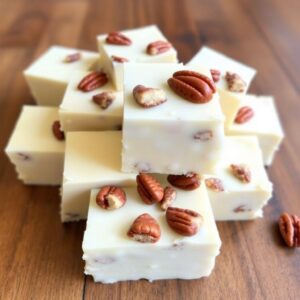
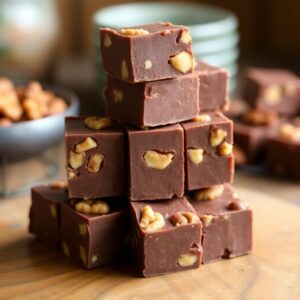
Adding nuts to fudge is a classic! They give the fudge a wonderful crunch that balances the smooth, creamy texture.
- Popular Nut Choices: The most common nuts you’ll find in American fudge are:
- Walnuts: These have a slightly earthy, rich flavor that goes perfectly with chocolate.
- Pecans: Sweet and buttery, pecans are another favorite.
- Almonds: From whole blanched almonds to slivered ones, they add a lovely texture and mild flavor.
Bringing Fudge to Life in Your Kitchen
Making small-batch nutty fudge isn’t about complicated steps. It’s mostly about following a recipe carefully and paying attention to a few key things.
The Basic Ingredients
You’ll need a few simple things you probably already have in your pantry:
- Sugar: The backbone of any sweet treat.
- Butter: For that rich, creamy taste and smooth texture.
- Milk or Cream: To help everything dissolve and create the perfect consistency.
- Chocolate: The star of the show! You can use cocoa powder for a classic chocolate flavor, or melted chocolate chips for an even richer taste.
- Vanilla Extract: A little bit of this goes a long way to boost the chocolate flavor.
- Nuts: Your chosen crunchy companions!
The Sweet Science of Making Fudge
The most important part of making fudge is cooking the sugar, butter, and milk mixture to the right temperature. This is where a candy thermometer comes in handy!
- Mixing and Heating: Combine your sugar, butter, and milk in a saucepan. Stir it gently over medium heat until the sugar dissolves completely.
- Reaching the “Soft Ball” Stage: This is the tricky part! You need to let the mixture boil without stirring until it reaches around 235-240°F (113-116°C). This temperature is called the “soft ball” stage, because if you drop a bit of the mixture into cold water, it forms a soft, pliable ball.
- Cooling Down: Once it reaches the right temperature, you remove it from the heat and let it cool slightly. This is important!
- The “Magic” Stir: After it’s cooled a bit, you start stirring it vigorously. This is what makes the sugar crystals form in just the right way to create that smooth, creamy fudge texture. You’ll see it start to thicken and lose its shine.
- Adding Flavor and Nuts: Once it’s thickened, you stir in your vanilla extract and those delicious nuts.
- Pouring and Setting: Quickly pour the fudge into a prepared pan (usually a square or rectangular pan lined with parchment paper). Let it cool completely at room temperature, or in the refrigerator, until it’s firm enough to cut.
Fudge Across the USA: Regional Twists
While chocolate fudge is king, different parts of the United States have their own special ways of enjoying fudge!
Sweet Spots for Fudge Lovers
- Mackinac Island, Michigan: This island is famous for its fudge! They have dozens of fudge shops, and many people visit just to try all the different flavors. They often use local ingredients and have a distinct style of making their fudge.
- New England: In places like Vermont and Massachusetts, you might find fudge made with local maple syrup for a unique, sweet flavor.
- The Southwest: Some fudge recipes in the Southwest might include a hint of chili powder or cinnamon for a little kick!
Experiencing the Joy of Small-Batch Nutty Fudge
Making small-batch nutty fudge is more than just a recipe; it’s an experience! It’s about the smell of chocolate filling your kitchen, the satisfaction of creating something delicious with your own hands, and sharing that sweetness with friends and family. From its humble beginnings as a possible kitchen mistake to becoming a beloved American treat enjoyed in small batches with crunchy nuts, fudge is a testament to how simple ingredients can create pure joy. Whether you’re in Michigan, New England, or your own backyard, the magic of homemade fudge is always just a few steps away.
TL;DR (Too Long; Didn’t Read)? Here’s the Sweet Scoop!
Making your own “small-batch” or “Nutty Fudge” is a fun and tasty way to get into candy making. This delicious treat, known for its smooth texture and added crunch from nuts like walnuts or pecans, has a history tied to the United States, with some stories suggesting it was invented by accident in American women’s colleges in the late 1800s. “Small-batch” means making it in smaller amounts, which is easier for home cooks and leads to fresher fudge. Adding nuts gives it a great texture contrast. The basic ingredients are simple: sugar, butter, milk, chocolate, vanilla, and nuts. The key to perfect fudge is cooking the sugar mixture to the “soft ball” stage and then stirring it correctly to get that creamy texture. Different regions in the US have their own fudge traditions, like the famous fudge shops on Mackinac Island, Michigan, or maple-flavored fudge in New England. Ultimately, making fudge is a rewarding experience that brings sweet happiness.